
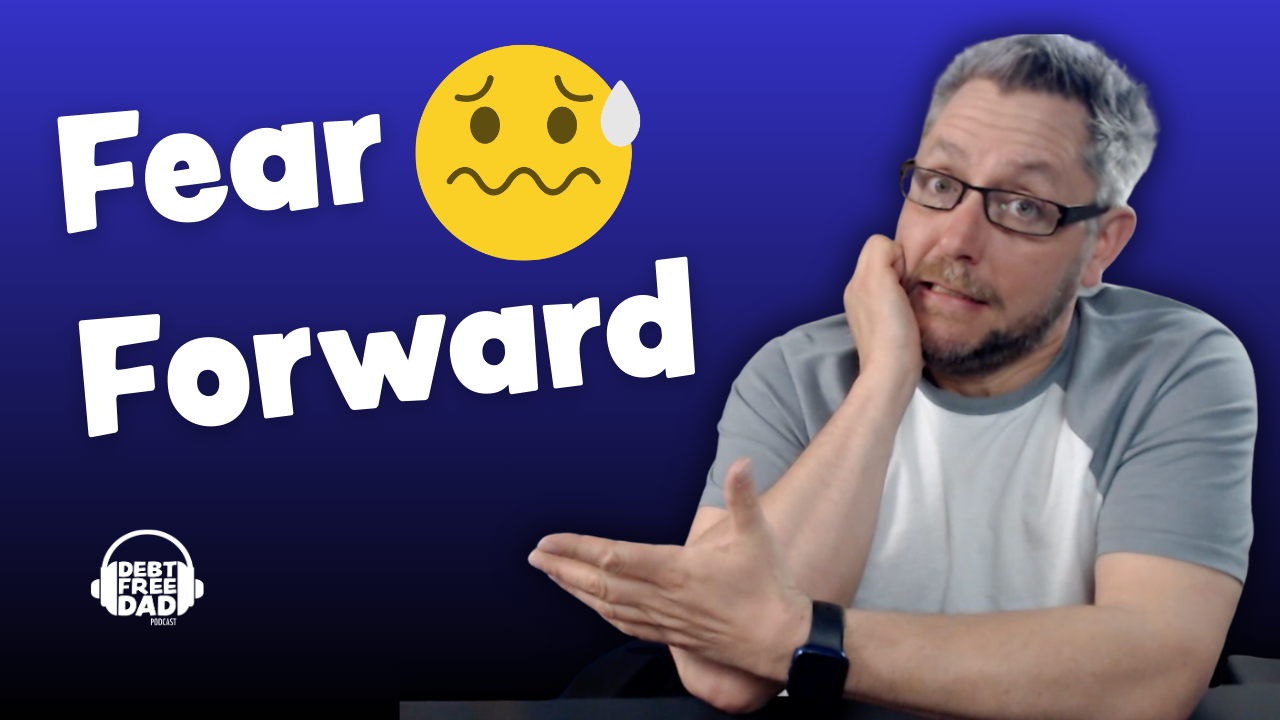
Episode: 383 - Fear Forward: From Financial Anxiety to Confidence
Resources
The Totally Awesome Debt Freedom Planner https://www.debtfreedad.com/planner
Connect With Brad
Website- https://www.debtfreedad.com
Facebook - https://www.facebook.com/thedebtfreedad
Private Facebook Group - https://www.facebook.com/groups/debtfreedad
Instagram - https://www.instagram.com/debtfreedad/
TikTok - https://www.tiktok.com/@debt_free_dad
YouTube - https://www.youtube.com/@bradnelson-debtfreedad2751/featured
Thanks For Listening
Like what you hear? Please, subscribe on the platform you listen to most: Apple Podcasts, iHeartRadio, Spotify, Tune-In, Stitcher, YouTube Music, YouTube
We LOVE feedback, and also helps us grow our podcast! Please leave us an honest review in Apple Podcasts, we read every single one.
Is there someone that you think would benefit from the Debt Free Dad podcast? Please, share this episode with them on your favorite social network!
Transcript
Brad Nelson:
Hey, so if you've ever felt that you're bad with money because it feels hard, it's awkward, it's overwhelming, this episode's gonna be for you because starting anything new, as you probably know, it's uncomfortable. Things like budgeting, paying off debt, saving, even having honest conversations about money. Now, today I want to share just a personal story about my son learning to drive. And I know that might not make sense about how it works with personal finances, but we're gonna talk about fear, we're gonna talk about mistakes, we're gonna talk about discomfort, and we're gonna feel like those beginning signs that you want to start to quit, right? These are signs that you're actually growing.
Announcer:
You're listening to the Debt Free Dad podcast with Brad Nelson. Brad and his co-hosts experience the anxiety of living paycheck to paycheck before learning the fundamentals of financial success. They are now on a mission to empower regular people to pay off their debt for good and enjoy happier, less stressful lives. Keep listening for inspirational interviews, tips, tricks, and practical advice to gain financial freedom.
Brad Nelson:
Welcome to today's show. My name is Brad Nelson. I'm the founder of Debt Free Dad. I paid off about $45,000 of debt. I've been debt-free now for nearly 13 years, and I've also helped thousands of people over the years, save and pay off tens of millions of dollars with the work that we do here at Defree Dad. Now, guys, after listening to this episode, if you're someone who is ready to take things to the next level, you're ready to break free from living paycheck to paycheck, you want to reduce financial stress, you want to build savings and finally pay off your debt for good, but maybe you're just not sure where to get started. Well, we've created some incredible free resources for you here at Defree Dad. We'll be sharing some details about how you get some of those later on in today's episode. As I said, guys, I want to share this story. My son finally has got his learner's permit. And I say finally as a dad because he's been 16 now for a few months and he's been working on driver's ed, the online version for well over six months. And I've had to get out his case a few times to kind of get at it because I'm tired of driving them all over the place. And it's time for him to grow up a little bit, take some responsibility, and obviously get his permit so we can get him out driving on the road and so we can get some practice, obviously, before he gets on and takes his test. And I gotta tell you guys, the first time after he got his learner's permit and he got behind the wheel, you guys probably know if you remember when you got your driver's license, or your permit at least, you know, you're nervous, right? And I would say honestly, nervous was putting it a little lightly because I can just feel like he's just tense. He's like, Oh my gosh, what am I gonna do? I don't know how to do this. You know, he was hesitant around other cars, obviously on the road. Uh, he second guessed himself constantly about what he should do next. Should he make this turn? Should I put my blinker on? Uh, he did, in fact, blow a couple of stop signs. I had to grab the wheel a few times, and he overthought everything. And you can see it on his face. That tight, focused, slightly panicked look of someone thinking, what if I mess this up, or am I doing this right, or what if I hit something? And honestly, that's exactly what starting something new feels like. You see, driving, as many of you know, we all know, unless you were a daredevil, I was not, but driving when at first, it's scary, right? You're in the control now of something super powerful with a car. There's obviously a lot of risk if you mess up, you get hit something or someone, right? There's other people around you. Uh, you you almost feel uh exposed. And when you're new, and especially a teenager, it's the first time you've ever felt that way. But the reality is, is the only way to get better is to keep driving. There's really no shortcut to any of it. As you guys know, the only way to overcome your fear and to get better at it is to keep doing it. There's no YouTube video that replaces that practice, there's no pep talk that replaces the experience of getting on the road. You have to sit in that discomfort and own it. You have to make those small mistakes. He had us run those stop signs so he could learn from that. You have to feel that awkwardness, you have to push through all those nerves that you're feeling. And guess what? Now, he is still new, like he's only at his learner's department now for about a week. But just within a week, it's amazing the difference already in him. I mean, we've got him on the road a lot already. Now, again, he's not perfect. He's still making mistakes, but I can tell he's way calmer. He's got a lot more confidence, he's much more aware of what he should and shouldn't be doing or where he should be looking when making turns or making lane changes. Now, why is that? Well, it's because he just did it and I made him do it, right? He faced that fear. And every time we made a mistake, we would go over it, right? And because he stayed with it, now his confidence is growing. Now, here's something else that really kind of stands out to me in all of this, too. I didn't just hand him the keys and say, good luck, Noah. Obviously, that would be insane and also very illegal, right? He couldn't just go out and drive by himself. But I did get in the passenger seat. Like if you're a parent, you know exactly what I'm talking about. We get in the passenger seat, and before we even turn on the car, what do we do? We show them what everything does, how everything works, where the lights are, how the mirrors work, how you use your mirrors, what are the blind spots, what are some of the lights that come on the dashboard, and what do you know, warnings look like? Where are the hazard lights? We talked through different types of situations before he ever faced them. I showed him where the emergency break was. And then we started to go out and drive. And as we drove together, I coached him down every street as we first got started, every intersection that we pulled up to, every situation that we came upon. Okay, Noah, you've got a four-way stop coming up. All right. Or no, now it's time to start slowing down. You're coming up on a stop sign. Hey, watch that car in the left lane coming up on your left. Don't let it scare you that he's gonna pass you, and really just encouraging him along the way. And when he missed, made a mistake, and admittedly it was kind of hard. I tried really hard not to panic, although there was one instance where I did a little bit because he's in full control of this vehicle, as I am not. But for the most part, I didn't panic. I just pulled him over on the side of the street when he made a mistake. I corrected him, went through, hey, this is what you did, this is what you can't do, and this is what you should do in the future. I explained what happened, and then just here's how you can work to improve for the next time. And when he did something right, I said it. Hey, nice job. That was a great turn. You handled that very well. You stopped without slamming on the brakes. Awesome job, right? And so the reality is, is why we do this as a parent and why we take our kids out, you don't want them to feel alone. It's a big responsibility to drive a car, and that matters. Because here's what I see and how this relates with money. So many people are trying to learn how to drive financially. And guess what? They're doing it completely alone or with some vague guidance from some online video they watched or some YouTube video or some something a broke friend or family member told them to do. They're doing it with no real coach or someone who's done this before, no real guidance, no one explaining what the dashboard lights mean when it comes to your personal finances, no one, you know, really sitting in the passenger seat saying, hey, you want to watch out for this coming up here. You want to watch out for that. That was a really good decision. You handle that correctly, right? They're essentially, and for most of us, the reality is we white knuckle it through our finances. And I did too at first. When I got started getting out of debt, I hoped I didn't crash. I hope I didn't make any mistakes. They assume, and I assumed, we were all just bad at it, though, when those mistakes happened, right? When those crashes occurred. And the reality is, is you know, all of us, my son wasn't necessarily bad at driving. He knew the mechanics of a vehicle. Like he's driven around golf carts and go-karts. He understands the brake and the gas. And he wasn't bad at the driving part. He was just new at driving. And most people aren't necessarily just bad with money, they're just new at being intentional with it and really deciding how they're going to use their finances rather than their finances taking control, right? And their emotions. There's a big difference in that. The first time you think about making a real budget or looking at your total amount of debt that you owe, or as we mentioned on this podcast many, many times, going back and looking at the last three to six months of your expenses and really looking at your spending honestly, or getting in the habit, especially a new habit of saying no to something that you really, really want. It feels just like driving for the first time, really uncomfortable. You hesitate, you second guess, you might blow that stop sign, blow that budget, you overspend, right? You forget to track something, and guess what? You start to feel discouraged and defeated. That doesn't mean that you're not cut out for any of the stuff that we're talking about on this podcast and getting out of debt and improving your finances. It means you're just practicing. What changed for Noah in the first week of having his learner's permit, it wasn't his talent. All right, it wasn't talent as it was for all of us. It's just repetition. It's just getting back out there and doing it again. Day after day, short little drives, little corrections, small wins here. And then slowly, that fear, it almost is like a dial, right? It starts to get turned down. And confidence didn't show up because he felt ready. You're never going to feel ready. He was not ready to drive. He even told me that. He's like, I'm afraid to drive. It's one of the reasons why he slacked so much on getting driver's ed done. He was fearful of it. He didn't feel ready. You're never going to feel ready when it comes to your finances either. It's just never going to be a perfect day that's going to show up and say, today is the day I need to start working on this stuff. Confidence grew because he went out there the first time and then he went out there a second time and he just kept on going. And also because he had some guidance. Getting help isn't a weakness. It's actually a wisdom. I mean, why would you want to reinvent the wheel? Why wouldn't you want to piggyback on somebody else who's already done all of this work and has already gone through all the pitfalls and the pain of getting out of debt and telling you, hey, these are the things to do and these are the things not to do, right? So just because you're getting help, it doesn't mean that you can't do it. It means you don't have to figure it out the hard way. And when it comes to coaching and even this podcast and getting around other like-minded people who want to reach financial goals that are similar to yours, it speeds up that confidence and that progress, right? Correction, it prevents bigger mistakes and it honestly prevents you from quitting in the long run. Because that encouragement that you're going to get, like I gave my son while he's driving, what does that do? It builds momentum. Hey, I did well on this one. I want to get back out there. And that's exactly what happened day after day. I want to start driving. I want to drive again. I want to drive more. We got him on the highway doing 55, 60 miles an hour. And as he's doing it, he's getting more and more confident. And that accountability, it keeps showing up. That's true also, like I said, with your finances and with learning to drive. It's true when it comes to wanting to get out of debt, when it comes to budgeting. And it's true with anything, honestly, that we talk about that's worth learning about, right? If you think about anything, your job, I mean, anything that you've had in your life, you were new at one time to it. But for some reason, when it comes to our finances, we have this mindset of, you know, I should I should just know how to do this. Well, that's just not the case, sadly. Right. So here's the big takeaway. Growth feels like anxiety at first. Improvement feels like almost incompetence at first. You almost feel stupid. And I feel that way too. It's like when I start something new, I just want to be good at it already. I don't want to go through the pain of learning how to do it. But sadly, there's no other way to do it. You just have to go through that pain. Progress feels like discomfort, right? That doesn't mean that you're a failure or that you suck at it. It just means that you're learning and that you're just new at it and you just need to keep doing it. You don't get confident right away at the start. You get confident as you get those small little wins, and then confidence begins to grow the more action you begin to take. That's the order. So if you're at the beginning of your financial journey, if it feels overwhelming to you, if it feels awkward, if you feel like you're blowing the stop signs like my son Noah did, that's good. Right. And I even told him that. I was like, dude, it's okay. I'm glad you did that because now we can talk about why that happened. What are the things to make sure that you avoid that in the future? And then also talking about the consequences of what happens if you don't improve that skill, if you don't stop at that stop sign. Same thing that comes with your finances. All right. It's a good sign when you're blowing those stop signs, especially when you're first getting started. It means that you're finally in the driver's seat. My encouragement for you today on today's show is just to stay with it. Pick it up again tomorrow, open your budget, track your spending, have the conversations about finances with your partner or your spouse, start making those small corrections and just keep building on those repetitions of doing this stuff every single day. Because the only way is to face that fear, is to fear forward, right? And consistency is what turns fear into confidence. And listen, like I said, you don't have to do this alone. That's exactly why Defree Dad exists. That's why we build our membership site, Roots Personal Finance. Because inside Roots, you don't get just a budgeting template and we give you a thumbs up and you're on your way and all by yourself. You get us, you get guidance, you get ongoing coaching, you get a group, a large group of people who are also working on this very same thing, who are going through the same types of struggles and they're feeling some of that pain. And a lot of them have already pushed through a lot of that, and they're going to be there to encourage you as well. The cool part is you also get correction when you need it. Things aren't going well, you got a great group of people to lean on. You get encouragement that you're doing it right, and you get accountability, which is the key to ongoing consistency so you don't quit. So if you're ready to build a little bit more confidence with your money and you want something more than just say this podcast, I invite you to, you know, jump on our Roots Personal Finance wait list. We don't have an open membership. We only open it several times a year. But if it's something that you're interested in, I highly recommend you jump on the wait list. You can go over to our website at defreedad.com and click on free resources and you'll see a wait list button there. You can also click the link in the comments of the show notes of this podcast episode. All right, guys, if you are ready to break free from living paycheck to paycheck, you want to reduce financial stress, you want to build savings, finally pay off your debt for good. But again, you're just not sure where to get started. Well, we've created some incredible free resources to help kind of kickstart you. And you can get that with Simplify My Money. Now, Simplify My Money is your step-by-step roadmap to better financial control. It's going to help you create and make better money decisions, stress-free money decision making. And you're also going to gain the tools and confidence to tackle your financial goals head on. You can sign up for this free newsletter by clicking the link at the top of the show notes. Thanks for joining us on today's show, and we will see you guys on the next episode. Thanks
Announcer:
for listening to the Debt Free Dad podcast. Connect with us on Facebook, TikTok, YouTube, and Instagram. Just search Debt Free Dad. If you found value in today's episode, please leave us a rating and review. We so appreciate it. For resources, show notes, and links mentioned in today's show, visit debtfreedad.com. Catch you next week.


