
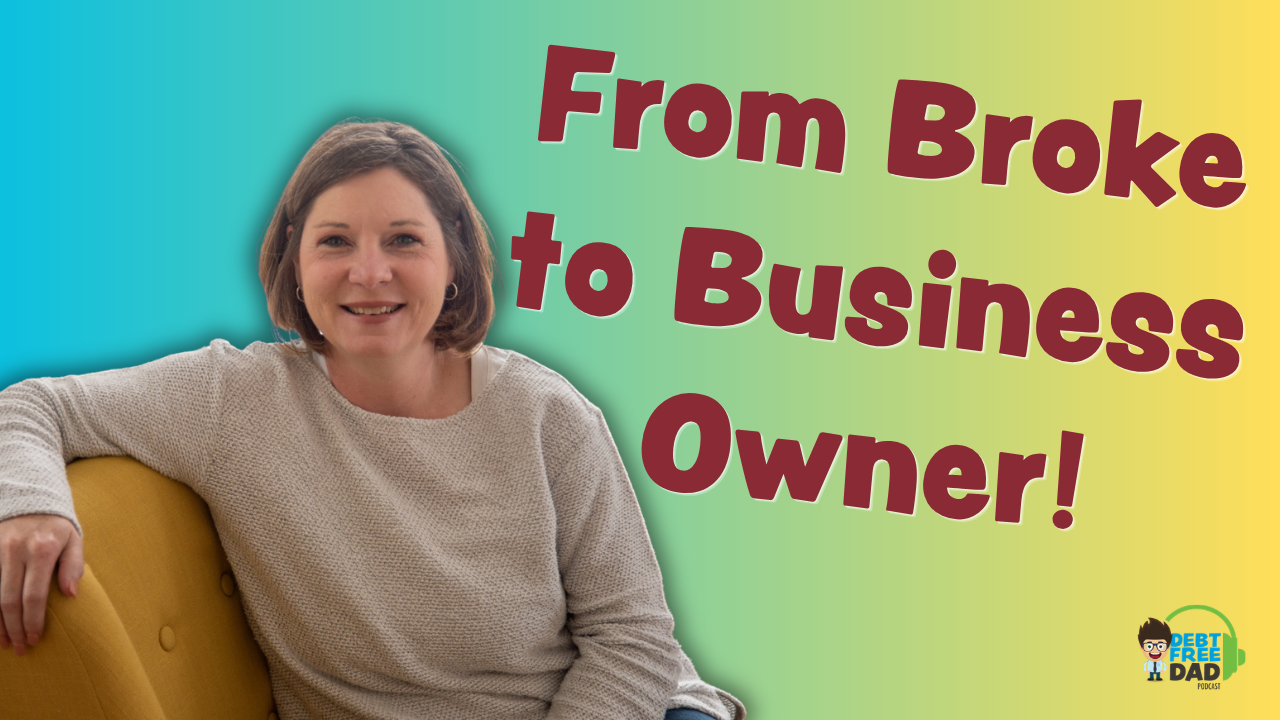
Episode: 390 - She Stopped Living Paycheck to Paycheck and Everything Changed
For years, Sonya Kunz looked successful on the outside.
She had a solid career, owned a home, and made good money. But behind the scenes, she was stuck in a cycle so many people know all too well: credit cards, constant stress, emotional spending, and living paycheck to paycheck.
Today, her life looks completely different.
Since joining Roots in 2022, Sonya has paid off more than $90,000 in debt, became officially debt free in December 2025, built a strong savings cushion, and even launched her own business.
But according to Sonya, the biggest transformation wasn’t just financial.
It was mental.
Sign up for our newsletter: https://www.debtfreedad.com/newsletters/simplify-my-money
“I Was Exhausted”
Sonya admitted that for most of her life, money management never came naturally to her.
Like many people, she became skilled at shifting debt around instead of eliminating it. Balance transfers, financing offers, and credit cards became normal. She lived outside her means while convincing herself things were manageable because she was still paying the bills.
But eventually, the emotional weight caught up with her.
The turning point came after buying two puppies. She realized she could always find a way to justify spending money on things she wanted, but struggled to commit that same energy toward fixing her financial situation.
That moment forced her to ask herself a hard question:
“If I can spend money on this, why can’t I invest in changing my life?”
That question led her to Debt Free Dad and the Roots membership.
The Problem Wasn’t Just Math
One of the biggest breakthroughs for Sonya came from realizing debt wasn’t only about numbers.
It was connected to emotions, habits, stress, and identity.
She discovered that emotional spending had become one of her biggest financial triggers. Shopping gave temporary relief and excitement, but the feeling never lasted. The debt always remained.
Over time, her mindset started changing.
Instead of asking:
“Can I buy this?”
She started asking:
“What does this purchase actually cost me?”
Not just financially, but emotionally.
Would it delay her goals?
Would it increase stress?
Would it take away from savings?
Would it move her further away from peace?
That shift completely changed how she viewed spending.
Sinking Funds Changed Everything
One of the most practical tools Sonya embraced was sinking funds.
Instead of getting blindsided by predictable expenses, she started preparing for them ahead of time.
She created separate savings categories for:
- Car insurance
- Christmas spending
- Pet expenses
- Emergencies
For the first time, those expenses stopped feeling like emergencies.
The result wasn’t perfection. She still had unexpected setbacks and moments where plans changed. But instead of relying on credit cards every time life happened, she had cash waiting.
That changed her stress level dramatically.
As Sonya explained during the episode, one of the best feelings in the world is opening your bank account after payday and realizing the money is still there.
Debt Freedom Created Opportunity
As Sonya gained control of her finances, something unexpected happened.
She started noticing opportunities she would have missed before.
What began as a woodworking hobby during COVID slowly turned into a side hustle refinishing furniture. Eventually, she officially launched her own business.
Then another opportunity appeared.
A local business owner she had connected with decided to retire and offered Sonya the chance to buy the business.
A few years earlier, that opportunity would have felt impossible.
But because Sonya had paid off debt, built savings, and created financial stability, she was able to seriously consider it.
Today, she owns a furniture refinishing and retail business while still working her full-time career.
That’s the part many people miss about getting out of debt.
Debt freedom doesn’t just remove stress.
It creates options.
Breaking Away From “Normal”
One of the most powerful parts of Sonya’s story is how she learned to stop caring about what society says success should look like.
When her paid-off car was damaged in an accident, the insurance company wanted to total it.
Most people would have taken the payout and upgraded to another vehicle with a payment attached.
Instead, Sonya negotiated repairs because mechanically the car still worked fine.
She didn’t want another car payment.
She didn’t need another car payment.
And she no longer cared about impressing anyone.
That’s a huge mindset shift.
So much of modern culture encourages people to constantly upgrade everything:
- Newer cars
- Bigger homes
- Better clothes
- More subscriptions
- More stuff
But as Sonya discovered, peace of mind is worth far more than appearances.
Teaching the Next Generation
Now that her own financial life has changed, Sonya is working to help her children avoid the same mistakes.
She openly talks with them about:
- Budgeting
- Saving
- Investing
- Roth IRAs
- Credit cards
- Living below their means
She especially wants them to understand one important lesson:
Living paycheck to paycheck is emotionally exhausting.
Even small habits started young can completely change someone’s future.
The Bigger Lesson
Sonya’s journey proves something important:
You do not need to be perfect with money to change your life.
You just need to be willing to start.
Over the last few years, Sonya didn’t magically become a different person overnight. She simply started making small intentional choices consistently.
She learned to pause before spending.
She built systems.
She stayed connected to support.
She kept going when things got hard.
And little by little, her entire life changed.
Today she has:
- No personal debt
- Strong savings
- Financial peace
- A growing business
- Bigger goals for the future
Most importantly, she has freedom.
And that’s what this journey is really about.
The Totally Awesome Debt Freedom Planner https://www.debtfreedad.com/planner
Connect With Brad
Website- https://www.debtfreedad.com
Facebook - https://www.facebook.com/thedebtfreedad
Private Facebook Group - https://www.facebook.com/groups/debtfreedad
Instagram - https://www.instagram.com/debtfreedad/
TikTok - https://www.tiktok.com/@debt_free_dad
YouTube - https://www.youtube.com/@bradnelson-debtfreedad2751/featured
Thanks For Listening
Like what you hear? Please, subscribe on the platform you listen to most: Apple Podcasts, iHeartRadio, Spotify, Tune-In, Stitcher, YouTube Music, YouTube
We LOVE feedback, and also helps us grow our podcast! Please leave us an honest review in Apple Podcasts, we read every single one.
Is there someone that you think would benefit from the Debt Free Dad podcast? Please, share this episode with them on your favorite social network!
Transcript
Sonia’s Debt Freedom Snapshot
Brad Nelson
Hey guys, so today we are going to be talking with Sonia Koons about her incredible journey from debt stress to financial freedom. Check this out. Since 2022, she's paid off over $90,000 of debt, became debt-free in December of 2025, and has already built her savings to tens of thousands of dollars, which is amazing. Now, in this episode, we're going to be diving into the mindset shifts, the sacrifices, the habits that helped her completely change her financial life over the last three and a half to four years while balancing things like work, family, and even starting her own business. Now, if you're looking for some motivation and proof that this is all possible, you're going to love this conversation.
Announcer
You're listening to the Debt Free Dad podcast with Brad Nelson. Brad and his co-hosts experience the anxiety of living paycheck to paycheck before learning the fundamentals of financial success. They are now on a mission to empower regular people to pay off their debt for good and enjoy happier, less stressful lives. Keep listening for inspirational interviews, tips, tricks, and practical advice to gain financial freedom.
Brad’s Story And Free Resources
Brad Nelson
Hey guys, welcome to today's show. My name is Brad Nelson. I'm the founder of Debt Free Dad. I paid off about $45,000 of debt. I've been debt-free now outside of my mortgage for over 13 years now. I've also been fortunate to help thousands of other people save and pay off tens of millions of dollars with the work that we do here at Debt Free Dad. Now, after listening to this episode, if you're ready to take things to the next level, hopefully, and I know it's going to, Sonia's uh journey is going to motivate you. And maybe you're ready to break free from living paycheck to paycheck like she was. Maybe you want to reduce financial stress, build your savings, finally pay off your debt for good. But maybe you're like a lot of people out there, you're just not sure where to get started. It's stressful, right? Well, we've created some incredible free resources for you here at Defree Dad, and I'll be sharing some details of how you can get some of those later on in today's episode. As I said, our guest today is Sonia. Now she's a wife, a mom of three adult children, now ages 24, 22, and 20, and also a proud owner of two very spoiled Shih Tzu puppies, who she jokingly says they are spoiled even more so than the kids these days, right? I know how that goes. We got three dogs ourselves. Sonia has worked as a project manager for the past 15 years, including several years living abroad in Germany. She's also been an Airbnb host now for the last four years and recently became the owner of a small furniture refinishing business, which I can't wait to talk to her about this in her hometown of Lidditz, known as one of America's coolest small towns. So hey Sonia, welcome back to the Deaf for Dead podcast. So glad to have you.
Sonya
Hi, Brad. Thanks for having me. I'm doing great. It's the weekend.
Brad Nelson
Absolutely. It's Friday as we're recording this. I mentioned in your intro, and you're going to be talking a little bit about how you started a business. And man, just managing that plus life, it can it can be a lot. But today you're here to talk a little bit and give us an update on your journey. You were back here on episode, I think it was 152.
Sonya
And I think I was three months into the program.
Brad Nelson
Yeah, yeah. So take us back a little bit because obviously it's been some time since you've been on the show and you did join Roots, but I want to kind of what caused you to join Roots or what was going on in your life back in 2022 before you went on this journey over the last three and a half, four years?
The Click Moment That Changed Everything
Sonya
Yeah. So I would say my entire life, I've never been good with money. I've always lived outside my means and spent more than I make living on credit cards. I don't really know what the exact point was, but living that day in and day out gets exhausting. And there was something about the amount of debt I had at that time and the money that I make, which is pretty good. And then we decided to get puppies. And of course, I didn't have the amount. I didn't have that money for the puppies. And there was something about that moment where I was like, okay, I made an excuse or reason that I could afford these puppies and all the expense that comes around it, but I don't have that same money to put towards actually getting out of debt and just living a different lifestyle. I don't know. There was just, I think it was all compiling to a certain point and it just kind of clicked for me. And I had came across, I think, your Facebook and then eventually maybe TikTok. I'm not sure what it was. And yeah, I thought, what the heck? If I can spend money on something else that I really don't need, why not try to spend money on a program that might actually benefit me in the long run? And if it doesn't, then you know, it was just another attempt. But for me, it's a very simple program and it's flexible to tailor the way that you need it to in your lifestyle. And it's not constraining, whereas maybe some of the other programs that you've talked about on your show are so constraining that maybe it fails because it doesn't work for you.
Brad Nelson
Yeah. Yeah. Before we get into like roots and some of the maybe some of the highlights there that really helped you the most, I can you share a little bit just with the audience, just so they get an understanding. Like what kind of you you mentioned you had some overspending issues and like what kinds of debts were you dealing with before you started? Like, did you have a mixture of things? Was it one thing, or what were we looking at?
Sonya
I did. So outside of a mortgage, I had a car and not a terribly expensive car, but still was a car payment.
Brad Nelson
Yeah.
Sonya
Loads of credit card debt or zero financing. It's always been credit card debt. I've been a master at transferring one debt to the next.
Brad Nelson
Um I have well, we're on we're part of the same team. I used to do that.
Sonya
You know, so yeah, a lot of credit card, you know.
Brad Nelson
In your relationship, was this an issue? Did it cause stress on your relationship?
Sonya
All the debt, like were there things like my husband and I are complete opposite. Okay. He's never had debt, he's not a budgeter. He knows in his head what he makes and what he needs and what the bills are. And that was never an issue. So I would say we've been married 25 years now. I would say most of the early years, there was a lot of fights around, you know, financial, whether it was just overspending or no communication in major purchases, something of that sort.
Brad Nelson
So I'm sure there's a lot of people out there that can relate. Money and personal finance issues and fights and arguments are one of the leading causes of splits and divorces. And it is, it's just something that the money is just a constant thing, whether it's just in your own personal life, but also it affects not only your relationships, but affects your parenting, it affects your career. You mentioned you were feeling the stress. I mean, where you are today, like what's the difference between when you started 2022 versus where you're at here in the middle of May of 2026?
What Life Feels Like Debt-Free
Sonya
The biggest difference for me is I still am budgeting, I still look at my account. I've laxed a little bit where I'm not looking at it every day, maybe every week, but the most wonderful feeling is opening my bank account a week after or even a day after payday. And there's still money in there. Yeah. That the transactions are not coming out every day because they don't have all of the the monthly payments on whatever debt. So that's the greatest feeling is actually, you know, seeing um, and surprises come along, and we I just had some, the budget to a certain degree matching your account on a daily basis. That that's relieving.
Brad Nelson
It's huge. You can't you just can't put a price on that, you know. Yeah. And we talk about that all the time. It's not just about the math, it's not about the numbers. And you have, I mean, you have some amazing savings numbers now, and we'll talk a little bit about that coming up, but it's really that just you can breathe a little bit, you know. It's not life still can be difficult at times and it can still be stressful financially, even paying off your debt. But it it's not nearly what it was when you're trying to juggle off.
Money Lessons With Kids And Marriage
Sonya
It is, and you talked about influences, and my I've my kids are in their 20s now, but they know I've been on this journey, and to a certain degree, my husband and has kind of joked with me along the way because he's not a budgeter, so that's a weird term for him.
Brad Nelson
Right.
Sonya
Two or three of my children are very good with their money, and my daughter is like a mirror to me in my 20s, and so at first she was and part of the maturity, she was not open to listening to anything about the financial skills or just trying to strengthen where she needs to be, but she's still in college and we still support her 100%. But in the last years with maturity, she's and living on her own. She lives off campus and she has to pay her rent. She has been open to trying to understand. And the biggest thing that I'm trying to teach her is that it is a horrible feeling to live paycheck to paycheck if you don't have to. Yeah. So I think she still has a very long journey to get there, but she's come a ways and she's at least receptive to listening to me. So the semester just ended. And I said, okay, now we need to sit down and kind of have a plan for summer because and the reason that she pays her rent is because she spends her money as soon as it gets into her account. So I'm not going to take my hard-earned effort and pay for your schooling when you are capable.
Brad Nelson
Right.
Sonya
Yeah, there's no no better medicine than a little bit.
Brad Nelson
Yeah, right. Yeah, there's no better medicine than a slap of real life. You know, that's kind of probably what she's experiencing. I have a son, he's 16, gonna be 17 in December. He's gonna be a junior next year. And as his dad, he's got a job. I've been talking to him about this stuff, and it's the same thing. He's like, I do this for a living, and he's the eye rolls and whatever, you know. Eventually he'll learn real quick.
Sonya
Yeah.
Brad Nelson
Sometimes life is the lesson.
Sonya
And even my son, who is now working full-time and still trying to find his path. But I talked to them about we they're not really adulting at the moment that we're still covering a lot of the bills. Try to get these skills under wraps before you actually have to start paying and finding it out the hard way. Yeah, yeah.
Brad Nelson
Even something is simple when you got teenage kids. Like um, he's just about to get his license. And I'm telling him, you're like, You're paying for your insurance, you're gonna start paying for half your cell phone bill, you're gonna start paying for like he's got an X Xbox subscription for his gaming system, you're paying for that. I'm not doing that anymore. And sometimes they feel like, oh, that's a I'm being punished. No, you're being taught responsibility because when you get to real life, yeah, I mean, you you have to pay this stuff, you have to learn to budget, you have to make sure that you've got enough money in your account. Those are all just easy things that you can do. And as parents, like you might feel bad. Oh, I'm punishing my kid, but what you're really doing is getting them prepared for what the rest of their life's gonna look like.
Sonya
And I had one parent that was very good with money and didn't actually make a lot. I am amazed what my mother has done with the amount of money she makes. She's a school bus driver, she's always been a school bus driver, she doesn't make much. And my dad, on the other hand, and my parents are now divorced as well. A lot of it was because the financial piece of it who made really good money, and somehow I tended to take after him of spending and living the same kind of lifestyle that he did. So definitely there's an influence that you have on your children. I'm not saying that's 100%, but there's a portion of it comes along with it.
Brad Nelson
For sure. Yeah. And I mean, like if my son goes and does that, I know where he gets it from. I'm a spender, I know that. Like I have to fight against myself in this. It's not like I'm perfect at this by any means, even being debt-free now for 13 plus years. And you can probably talk to that a little bit is you still have the habits that come back and rear their ugly head every once in a while, and you still got to battle that stuff. It's human, right?
Sonya
But I think there's at least for me, I think everybody might take something different out of your program. But the things that really changed my habits outside of the program, I think also aging, maybe not needing as many materialistic things as much as I don't really, I don't have fun shopping anymore, or I feel like I don't need, but I recognize through your program that the emotional spending is where I was falling, you know, there for whatever reasons, that was kind of what was making me feel good at the moment, right? So I recognize that was something that was affecting me.
Sinking Funds And Emotional Spending
Sonya
Yeah. And then we talked about just not living paycheck to paycheck. The concept of sinking funds is something that I have just embraced, and it is part of my budget, like it's a monthly bill. Yeah, there have been times where I've had to maybe reduce or eliminate like the Christmas fund. I would say the end of last year, just the way that the year was going, that completely got canceled for a few months. But car insurance, I never touch it. So I pay my premium every six months, and that money goes into an account just like I'm paying my insurance on a monthly basis.
Brad Nelson
Yeah.
Sonya
So I do the Christmas fund and then I also have a pet fund, whether it's their annual visit or something is coming up. Though those are my three, and of course, your emergency fund.
Brad Nelson
Right. Um, so uh yeah, I want to I want to come back to the sinking funds, but you said something interesting about shopping is no longer fun. You don't necessarily feel like you need all the stuff that you used to need or feel like you needed. Can you talk a little bit about the mindset shift there? Because someone might think about, well, I love shopping. I don't want to give up shopping. What what's different now is versus before?
Sonya
I think it's knowing that if I don't have the money, of course, if I if there's something I really want and I'm budgeting for it, or now that I'm debt-free, and I think you it you talked about this one time, you might slip a little bit and maybe you have to reduce out of your emergency fund or something where it wasn't really planned, but the money is there. So when I think about, okay, now that I have the money, or if I don't have the money, what's the consequence of spending at that moment? Is it now that I have $100 extra on my credit card that I have to pay off that wasn't planned? That's $100 further from my goal when I was paying off debt, or is it $100 less now that is going into my savings or another sinking fund for something that I really want? So I just tend to think about it more. And then I'm not always the greatest, but the impulse shopping too is just letting it sit and saying, okay, you know, let's just revisit it tomorrow. And that's something that my my daughter that I've been trying to help her with. She's very impulsive by using that 24-hour rule. That one I didn't ever have to utilize too much, but I think it was just the stress of knowing, you know. Yeah. So I kind of go through that need or want. Sure, and how I guess I'm able to gauge how I feel from that transaction a little bit better, rather than living in the moment and feeling what I'm feeling.
Brad Nelson
Yeah. I want to talk a little bit about roots because obviously, in the very beginning, the one of the very first modules and things that we have everyone go through is not even really related to budgeting or saving or anything like that. It's all about behavior, habits, choices, really developing like a reason or a why of why you want to get out of debt. And you said something where you mentioned where you think about things differently now. Did that play a role in that and really thinking forward of like, this is where I am in life. I'm not happy with where I am financially. I want to go here. Has that helped? Like just really figuring out like where you want to go, where you want to be. You open up your business. How did that play a role? Because some people look at finances on a surface surface level of it's just math and numbers, but it really does dive a lot deeper because it's money is the tool that can help you build that life.
Sonya
You've highlighted it doesn't matter where you are in your salary range, right? You can be your definition of successful and still be horribly in financial debt. For me, I recognize I make pretty good money. I shouldn't have to live like this. But the other caveat to that is that if you don't have debt, it allows you opportunity. So if you have cash on hand and you have the opportunity to buy something, whether it's a great deal, something that you wanted, but or just wanting to do something else, I have that. I think it was the opportunity also. If I was in the position, I would be able to make different choices. And as maybe we'll get into, that's kind of led to my side gig turning into more of a passion into a small business.
Brad Nelson
Yeah. And I love that you brought up that that word opportunity, because it is all about that. You mentioned like you were you're thinking about that with purchases. Is it an eater or want? And it's all about thinking about the opportunity cost. Yes, I can say yes to this today. But if I say yes to this, I'm also saying no to ever to some other things, like a bigger savings, a larger emergency fund, or I'm saying no to the things I really want because I want to be spontaneous or you know, make an emotional purchase. And it's just sometimes taking that real quick, just a few seconds of what is the opportunity cost of this purchase? But there's also an opportunity cost of making the right decisions because now that you've made all these right decisions, and I want to talk about this because last episode we had a page on, and Paige, she's a roots member, she just recently became debt-free, and she talks about how she turned her passion of animals into dog sitting and pet watching, and it was a huge contribution to her paying off debt within the last two and a half years. And now you started a business as a side hustle. So let's talk about that.
Turning A Hobby Into A Business
Brad Nelson
You got into this opportunity of doing what? Because I think this is so cool.
Sonya
Yeah, we coincidentally bought our house right before COVID. And one of the first projects I took on in my house threw me into woodworking. And then also getting into some Facebook groups, I started building desks because everybody needed desk at home. And I had did some furniture refinishing in the past just for personal use, but then that started going into I started refinishing furniture. And outside of then trying to make extra money prior to Roots, which probably wasn't really going to debt, it was just being spent somewhere, um, or back into products and tools that I thought I needed to do that hobby. But then when I started Roots, you had talked about the crafting that you were doing or just different ideas to generate additional income. And so I really kind of took that as a way to make extra income. Now, a year prior to starting my business, knowing that I was going to take it to the next level, I stopped utilizing that money to pay off debt and just let it sit into an account to just build up knowing what was coming. So I guess you could call that kind of a different sinking fund away. But yeah, so I refinish furniture, but because I do small woodworking, I also make things, but it allows me the opportunity to make repairs to furniture if I need to. In 2024, I decided to take it from a side hustle and officially make it into a sole proprietorship. Came up with a name. And then I met another woman in my area that has a small business. And she has, I've told her she had an impact on me, but it was just conversational-wise, seeing that she had a small business a little bit different than what I'm doing. And I thought, you know, I should take mine to the next level. That's when I had officially created it in August 2024. And then again, the opportunity portion is I end up going into a small, the town we live in has a lot of small shops, and it tends to be a tourist destination to some degree. We live in Amish Country, Lancaster County, Pennsylvania. And one of the shops was selling the furniture paint that I wanted to start using. And I had gone into there, and then she needed somebody to refinish her big, bigger pieces because she was older and was having health issues. And then not long after that, she wanted to retire. And she said, Are you interested in buying my business? And essentially, outside of the furniture portion, it's she has a lot of different products, but gift shop and whatnot. And at first, I was like, that's not really the vision I had. And I started helping her and then realizing, well, there's diversity here. Not everybody is coming in looking for furniture. And so I decided, what the heck? So, in preparation a year before taking over, or six months, a year in preparation of okay, I'm now gonna be a brick or mortar, but then changing up from sole proprietorship and to LLC and rebranding. And yeah, so all of that kind of sinking fund that I was building up in my furniture area was going to all my startup costs. Now I will say I'm debt-free on a personal level, but I am not debt-free on the business. And essentially I bought all of her inventory, which was still a really great deal. Yeah. But along with all of that, I was able to take her numbers and do forecasting and use that for what is my first, second, third year going to look like, given her numbers. And what can I do differently? What do I think that I can improve upon on what she did? But the good news is I keep that all separate from my personal and it's doing great. And then we're picking up momentum. And yeah, I'm still working my day job. So I Haven't quit that. So I do have a staff and it's a lot to manage, but that's kind of my personality, anyways. And I'm hoping one day I can walk away from my main job.
Brad Nelson
Yeah. How awesome. Would you ever have thought three and a half years ago that this is where you would be? No, absolutely not.
Sonya
Right.
Brad Nelson
It's incredible. I get the awesome opportunity to be able to talk to amazing people like you who have gone through this journey, and people's responses to that are all the same. It's like I just never would have imagined how much my life would have changed by doing this. And that's why we're so passionate about here, because again, it's not just about numbers, but this stuff truly does this. It changes your life. And it's you just never know, like you said, you probably never would have imagined that you're in the spot that you're in now, but it's all because you took these little steps along the way and these doors kept opening for you. Things continuously got better, and the opportunities now are presenting themselves, which is and I projected when I wanted my debt paid off.
Sonya
So I paid it in December 2025, knowing I was taking over mid-January. When I contemplated how I was spending that last funding of extra money coming in, do I pay it off? Do I put it into the business? And ultimately I thought, okay, I don't want to take out some extra debt on my business, but I would really just like to not have to worry about anything on my personal side. That is all done. Yeah, you know, and so I'm glad I did that. And I absolutely do not have to worry about any personal debt, and I'm focusing on building emergency funds up. And I did take some of the extra money and I did put that in the business, but I keep track of all that. And at the end of the year, it's all going under the same tax income for me as well. So it's just a matter of where you push the numbers.
Brad Nelson
Yeah. Yeah, it's incredible.
What Helped Most In Roots
Brad Nelson
So we're probably having people listening to this show right now that are either wanting to get started, they're interested in getting out of debt, or they're on their journey. But if you had to go back and start all the way over back in 2022, and you know, you joined Roots, what do you feel made the biggest impact on you, especially early on? We had you on in your first, I think, three or four months.
Sonya
And yeah, I think it was three months.
Brad Nelson
Yeah, you had paid off over $13,000, I think. And you took off right away. Because people are probably like, Well, how did she pay off over $90,000? And and you saved what now in in sinking funds now since December.
Sonya
Yeah, I think I had told you had literally about $20,000. And part of that was my I get my bonus in January, and I had some other money, and I've taken a good portion of that and I've kind of put that into the business, but it was there, and that's how I chose to spend it, and I'm building my savings back up again. I would say if I could go back, I guess your question is how do you criticize somebody to maybe take the step? Yeah.
Brad Nelson
If you're just getting started, what do you feel were those first things that you did that made the biggest difference, especially in those first few months?
Sonya
I would say really putting your heart in and being diligent about the the different modules that you have. So I did all those. And as you tell your listeners, it's at your own pace. So there's no you have to keep on schedule. I was joining the meetings a lot of the times and participating in the challenges. I would just say if you're tired of living that paycheck, paycheck, just being open to different ideas.
Brad Nelson
It's a big one.
Sonya
It's a big one. Yeah, you know, and I mentioned budgeting. My husband was just uh talking to my son because my son's really into stocks and stuff like that. And he just makes fun of the word budgeting. And I said, you know, that's just how my brain works, and I have to do that. So kind of getting away from that mindset and stereotypes of right. Um, and I think you've used another word, you don't have to use budget, you know, that's full plan.
Brad Nelson
Yeah.
Sonya
I mean, yeah, it's more or less having a plan for your money.
Brad Nelson
Yeah.
Sonya
Because swiping the card, the next thing you know, you're like, oh my gosh, I spent that much at, you know, I would just say being open to and doing the module and joining the meetings, and you know, towards the end, I didn't join as many meetings as I did or like because you put them at nine o'clock Eastern Standard Time.
Brad Nelson
It gets late for me too. I don't think we had one last night, it was eight o'clock our time, and I'm wiped out by eight o'clock.
Sonya
Yeah, but but those are very helpful. And hearing, I think the other thing is in in your programming, you do this very well, is highlighting people's achievements. So seeing what other people are doing, and sometimes you get ideas from what others are doing and motivation. I remember when you had, I don't remember the couple's name, it was probably well over a year ago. And when they reached their financial journey, there was like, I can't remember that your name is Laura Lori and Daniel. It might, yes, I think so. Yeah, and I was just like, oh, you know, it was like, I want that. So that drove me to keep going as well.
Brad Nelson
Yeah. Yeah. And I think you brought up a lot of things. And I think if you're the circle you're around when it comes to this journey, I think is really important. I think that's probably, I mean, yeah, the stuff that we teach, not to pat ourselves on the back, is great, right? It helps a lot of people. But I think the most important part of what we do in Roots or even here at Defree Dad is the community. It's getting yourself around people who are working on a similar goal or common goals. Because if you look around you, the majority of people are living paycheck to paycheck. The majority of people are struggling financially, the majority of people aren't paying attention to their finances. So it's easy just to fall into the majority. And sadly, that's why a lot of people are in the majority.
Sonya
Yeah. I think society too. Like there's so much marketing that's driven that you have to have this type of car, or you have to have this, or so it's breaking away from that as well. And I'll give you just one more example.
Resisting Lifestyle Pressure After A Crash
Sonya
My son's in the military, he came home and I let him borrow my car for the week because he's under 25 and it was gonna cost him a heck of a lot of money to rent to rent, yeah. Lo and behold, an hour after he's on the road, a deer jumps out, hits my car. Okay, my car's paid off. It wasn't that much damage, but by the end of the assessment, they wanted to total the car. And I'm like, no, like, one, I don't want another car payment. Two, mechanically, nothing was wrong with it. Right. And I talked to the shop, and because I I knew one portion had this tiny little dent. I'm like, I don't need a new fender, leave the den. So I was able to negotiate or discuss with the body shop and then negotiate with the insurance and say, okay, like I don't want to total the car. Being okay with what society tells us, you know. Any I I had a friend I was talking about this with, and she said, you know, any other person would have just, or not person, but nine times out of 10 or 90% of the people would have been like, okay, great, give me the money, I'll go get a new car. I want a new car anyways. Mine's 10 years old. But it goes back to the opportunity again, right? Like, I don't want that car payment. Right. I don't even know what it costs these days for a new car or a year old car.
Brad Nelson
Yeah.
Sonya
But I I'm fine, you know.
Brad Nelson
Right, right.
Sonya
So, yeah, breaking away from that mindset as well. Right.
Brad Nelson
Well, and I think when you go through the journey like you have, and you've come as far as you have, and now you have this amazing opportunity of opening up your own business. Like, like I said earlier, that the peace of mind, I think, is what you value more than anything else. You know, and it and it's so hard to tell people that who are just getting started because you are so materialistically driven. We are as a society, like it's just buy more, have more, get better, have better stuff, compete against your neighbors, your friends, have a better car. It's all what we're talking about. You mentioned that with the marketing. And when you step away from that and you just focus on what truly is important in your life, and for most people, it isn't even any of this stuff, it's just what we're being sold. You actually realize like peace of mind is way more valuable than a payment or a nicer clothes or nicer car, any of that other stuff.
Sonya
Yeah. And I'm building my savings account. I completely drained it, which after putting whatever in the business, and we had we owed taxes this year, wasn't expecting that. And then my husband's car needed some major work at inspection, which we were contemplating trading it in because it's not kind of on its verge and we're waiting for it to, but we decided let's get it through one more year, let's save some more money. So, am I unhappy that I had to drain for two unfund things? But I also had it and I didn't have to worry about on a credit card or something, or putting on a credit card and now I have to pay it off. So it's just those unexpected. I really thought we were getting money back this tax year. And I thought, okay, we know we're gonna need work on the car, so we'll use that. And that was not the case. And I'm like, okay, well, that plan didn't work.
Brad Nelson
Yeah. Um, so with your relationship, you mentioned things were a little stressful before. Have you noticed a considerable change if money is not such a sore spot anymore?
Sonya
Yes. I mean, there's other factors that have changed in the course of our relationship. Sure. The last 10, 12 years, our roles in financial salaries have switched. Right. He was the breadwinner, now I'm the breadwinner. Right. I know. That changes the dynamics to some degree. But again, I think it also is the point in our our lives, too, where we're just not wanting the same things that we wanted when we were 20, you know, 15 years ago. Our focus is different. We're my husband's 52. I'm almost 50.
Building Generational Wealth With Small Steps
Sonya
So, you know, being more ready for retirement and where do we want to go next?
Brad Nelson
Yeah, what are the next steps?
Sonya
Um, and I think that just happens naturally. You just kind of hit that age and your perspectives change different. Our kids are now older, so they're all single or mostly single, but you know, there's gonna be a day they're gonna get married, they're gonna have kids, you know. So it's like I want to be that grandparent, you know. I don't want to be in debt and not being able. My husband's family was my mom helped on non-financial ways that I could never I'm grateful. But my husband's grandparents when they were alive and his parents, you know, it was like the little things they'd go to the grocery store and they'd pick up things or give us a hundred dollars or and it was like I want to be that parent where I can do that for my kids. Do they need it? But when you're starting off in your 20s, having an extra hundred dollars to go to the grocery store, like it it meant so much, you know. Yeah, so much things for my kids and grandchildren, right?
Brad Nelson
Yeah, I'm doing the same thing. I I chose to start putting just a little bit of money away from my kids every single month, and it's not a huge amount between the two of them. But now my son's got more money than I did probably up until I was age 33 in a savings account. He's only 16 years old because I've just putting this little amount in. And now I'm gonna transfer that over to him in the sense of he doesn't get the money yet, but you're gonna start putting the money in because I want you to see how this thing grows, and that's how you start to teach kids some of this stuff. And again, you can start out with just five, 10, 15 bucks a week, especially as your finances improve. And same, I'm doing the same thing for my daughter, and a lot of people will say, Well, like, don't you feel like you're spoiling them that way? I'm like, Well, no, if I had to start, I would love to start out my early 20s with a nice little nest egg, of especially with how expensive everything is now, you know.
Sonya
My my daughter and my son were just here this morning, and my youngest son is he has had money in his account from the minute he got an account. He's just very good with his money, but he also is very interested. He invests, he already has a Roth. He and he was talking to my daughter about that today because my daughter works at a bakery through college, but they make really good money compared to when we were making first jobs, and she transfers money for her apartment every paycheck. But I said, you know, you you really should start taking, even if it's $25 and putting it into a Roth or putting, I was never taught that. I don't even think I ever heard any of financial topics come out of my parents' mouth about and maybe because when we were younger, pensions with a company were more the thing. So you didn't have 401ks and retirement accounts. At least that's my perspective. But I was telling that to my daughter today. It's like $25 doesn't seem like I'm up, but you're in your 20s. So now sit 20 years later, where I'm sitting, going, hmm, yeah, if I could have taken some of that money from that job, what 16, 17 or whatnot, like you said.
Brad Nelson
Yeah, are you gonna have $20? No. Right, right. I mean, for a lot of us parents, we're spending on a bunch of crap for our kids as it is, you know, it's it's all about again, reevaluating where the money's going and saying, what if I instead took this money and put it away? You know, and even for kids, once they start working and have a regular job, they can open up a kid's Roth IRA out there. You can open up a kids' Roth IRA, you can start even before the age of 18. But even if they're not working and you want to start putting some money away, there's especially in today's day and age, there's so many of these little financial tools that are out there, all these apps, all these brokerage firms that are out there. I mean, they make it so simple. 10 bucks a 10 bucks a month, 25 bucks. You don't even miss the money if you set it up automatically. Yeah, and it can make such a huge difference. We have that example inside Roots, and we talk about it in our live meetups constantly is long-term savings is huge. And the secret to compound interest is the length of time that you have the money in there. So if you start putting your money away for your kids at a young age, all the way up to say, and they keep doing it up until retirement age, a lot of people could be self-made millionaires just by doing something really small every single month.
Sonya
I just heard something, maybe that this would be a great topic for one of your podcasts. One of the things that I just heard uh recently, and you don't think about it because we grew up in an age where it was just cash and now it is so technology driven, but our kids they don't know what it's like to actually carry cash around, everything is digital. So the whole mindset and concept of money, I I don't know how to explain it because I'm not living like them, but it's a totally different world. And how does that influence how you are spending your money and saving your money?
Brad Nelson
Um well, the credit card companies and those they are geniuses at marketing. They know that you're gonna spend more money using a card or using cardless options, and you have those stats inside roots and talking about the differences and what is and not getting them.
Sonya
They as soon as they get in college, they are getting, you know, discover is the big one. They go after it immediately. And I told my daughter, I said, absolutely, under no circumstances, she's 22 now, so she can do what she wants. I said, Do not get a credit card, you can't afford one, right? And you are so much like I was at your age, just don't do it.
Brad Nelson
Yeah, yeah, they're sneaky. They'll be like, Oh, we'll give you like a $500 limit, and then all of a sudden you start making that payment on time, and then six months later, it's a $2,000 limit, and then six months after that, it's a $5,000 limit. And before you know it, they got their grips right on you, you know. And yeah, so yeah, you gotta be gotta be very mindful and careful with the kids and the cards. It's no question.
What’s Next And The Van Goal
Brad Nelson
Yeah, what's next? So you got a furniture shop, like anything else that you're aspiring to do now that you've gone on this journey?
Sonya
You're probably like, heck no, I got enough going on. No, I mean, we've never talked about it, but part of that initial debt, and you'll see that in the numbers I sent you, is when I had taken a different job, I bought a second house, an Airbnb. That so there was a good portion of that initial debt that was part of that startup that runs itself and it's more or less an investment. But outside of that, and my next thing is I want a van for my shop. So I have a sedan, so I would say that's my next goal is to get a van, not a new one, just something that you know is something to transport things around.
Brad Nelson
Yep.
Sonya
Yeah, but just keep increasing where I can walk away from my own job and just do what I really like to do.
Brad Nelson
Well, it's been uh a privilege to be able to talk to you today. It's so proud of you for all the work that you put in. And it's just this is the best part about my job is I get to see the entire journey and where you've come from. We've been messaging throughout the last couple of years and just kind of keeping in touch, and it's just so cool to see where you're at right now. So I just want to say congratulations to you and thank you for the program.
Sonya
And I know you you say it in your Facebook and whatnot, but we talked about joining. You offer a free portion to start, right? And before fully committing. So there's a lot of tools that you give without fully committing.
Brad Nelson
Yeah, tons.
Sonya
Yes.
Brad Nelson
Yeah, this podcast, the workshops that we have on our website, there's a lot of free stuff out there that'll get you started. But like we've talked about today, I think the most important thing that we offer is just that community. It's just that accountability, the support. And that's what Ruth provides. But Sonia, congratulations to you. Thanks so much for being on the show today.
Sonya
All right,
Simplify My Money Signup And Closing
Sonya
thank you so much.
Brad Nelson
Uh now, if you're ready to break free from living paycheck to paycheck, you want to reduce financial stress, you want to build your savings and finally pay off your debt for good. But again, maybe you're not sure where to get started. Well, don't worry, we've got you covered. Uh Simplify My Money is sent to you each and every Sunday to your email. It is your step-by-step roadmap to better financial control. And you're also gonna learn some easy to follow strategies to manage your money more effectively. It's gonna help you make stress-free money decisions. And these decisions are gonna help you simplify your financial life with proven tips that actually work. And you're gonna gain the tools and confidence to tackle your financial goals head on. You can sign up for Simplify My Money by clicking the link at the top of the show notes. Thanks for joining us on today's show, and we will see you guys on the next episode.
Announcer
Thanks for listening to the Debt Free Dad podcast. Connect with us on Facebook, TikTok, YouTube, and Instagram. Just search Debt Free Dad. If you found value in today's episode, please leave us a rating and review. We so appreciate it. For resources, show notes, and links mentioned in today's show, visit debtfred.com. Catch you next week.


