
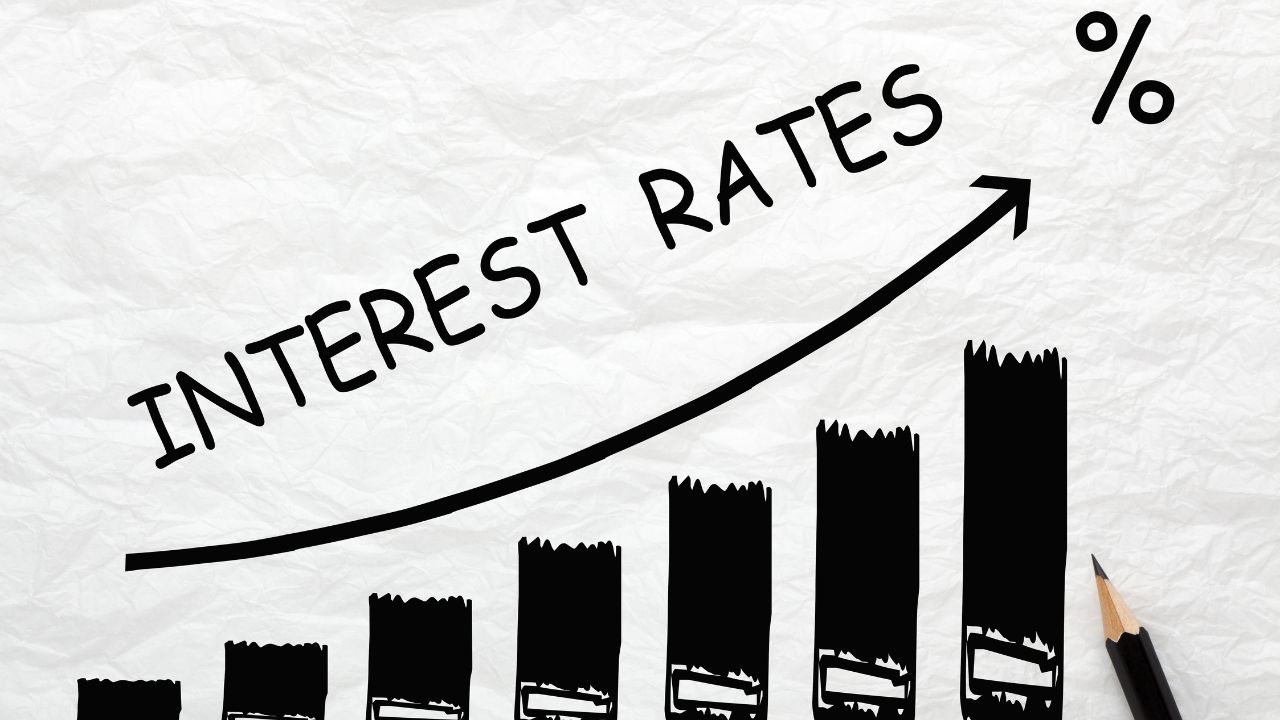
Interest rates are back in the headlines.
The Federal Reserve meets September 15–16, and there’s plenty of discussion about whether rates could move again. At its last meeting in July, the Fed kept its benchmark rate at 3.5% to 3.75%, although several members wanted rates increased.
And whenever this happens, the headlines start flying.
Will rates go up?
Will they stay the same?
What does this mean for mortgages?
What about credit cards?
Should I wait to buy something?
Are things about to get worse?
Before long, you can find yourself stressed about a decision being made in Washington that you have absolutely no control over.
So let’s bring this back to something a little more useful.
You don't control interest rates.
You don't decide what the Federal Reserve does.
You don't control inflation.
You don't control what banks decide to charge.
And you definitely don't control what financial experts on TV are going to predict tomorrow.
But you DO control a lot of what happens inside your own financial life.
And that's where your energy should go.
First, know which debts are actually affected.
An interest-rate change doesn't automatically change every debt you have.
If you already have a fixed-rate mortgage or fixed-rate loan, your rate generally isn't suddenly going to change because the Fed made a move.
Variable-rate debt is different.
Credit cards, lines of credit, adjustable-rate loans and some other types of borrowing can become more expensive when rates rise.
That means this is a great time to pull out your debt list and actually know:
-
What do I owe?
-
What's the interest rate?
-
Is it fixed or variable?
-
What's my minimum payment?
-
Which debt is costing me the most?
You don't need to become an economist.
You need to know your numbers.
Focus on reducing the debt you can control.
If rates rise and you're carrying high-interest or variable-rate debt, worrying about the Federal Reserve isn't going to make that debt cheaper.
Paying it down will.
Keep making your minimum payments on everything, then put your extra money toward your debt-payoff strategy.
Even if you can't throw hundreds or thousands of dollars at it right now, progress still matters.
An extra $25, $50 or $100 going toward debt is money you're no longer paying interest on forever.
You may not control the interest rate.
But you can work toward controlling how much money is exposed to it.
Be careful about adding new debt.
This is also where slowing down before borrowing becomes important.
If you're looking at financing a vehicle, furniture, renovations or something else, don't just ask:
“Can I afford the payment?”
Ask:
“How much is this going to cost me altogether?”
A lower monthly payment stretched over a longer term can make something look affordable while quietly costing you thousands more.
Higher interest rates make that even more important.
Look at the rate.
Look at the term.
Look at the total cost.
Not just the shiny little monthly payment the salesperson puts in front of you.
Build some breathing room.
Another thing you CAN control is how prepared you are for something unexpected.
You don't need a perfect six-month emergency fund tomorrow.
Start with something.
$500.
$1,000.
Then keep building.
Because when the car needs a repair or the water heater dies, having money set aside means you're less likely to put the entire expense onto a high-interest credit card.
Interest rates matter a whole lot less when you don't have to borrow every time life happens.
Don't make panic decisions.
This may be the biggest one.
Financial news has a way of making everything sound urgent.
Rates are changing!
Markets are moving!
Inflation!
Recession!
Housing!
But your financial plan shouldn't change every time a headline does.
If you're paying off debt, keep paying off debt.
If you're building an emergency fund, keep building it.
If you're tracking your spending, keep tracking it.
If you're trying to live below your means, keep doing that.
The boring stuff still works.
Actually, the boring stuff becomes even MORE valuable when everything around you feels uncertain.
Control your corner.
There will always be something happening in the economy that you can't control.
Interest rates will move.
Prices will change.
Markets will rise and fall.
Politicians will argue.
Experts will make predictions, and half of them will eventually explain why their last prediction was wrong.
You can spend a lot of energy worrying about all of it.
Or you can look at your own financial life and ask:
What's one thing I CAN do this week that puts me in a better position?
Maybe it's paying an extra $50 toward a credit card.
Maybe it's finally checking the interest rates on your debts.
Maybe it's starting a small emergency fund.
Maybe it's deciding not to finance something you don't actually need.
Maybe it's simply sitting down and getting clear on where your money is going.
You can't control interest rates.
But you can control your next decision.
And enough good decisions stacked together can make those big scary headlines matter a whole lot less.
Find Your First $100 (or more) –FAST!
Discover simple, proven steps to quickly find hidden money — without budgeting every penny, giving up everything you love, or working a second job.
✅ Find hidden money without needing a second job or major sacrifices
✅ Get quick wins that boost your confidence and motivation instantly
✅ Break out of the "I'm stuck" cycle and take real control of your money
✅ Discover where your money is hiding (spoiler: it’s closer than you think)
✅ Create breathing room in your budget — without giving up everything you enjoy
🎁 BONUS: Plus — stay until the end to grab 4 free bonus resources to help you find hidden cash even faster!

Responses