
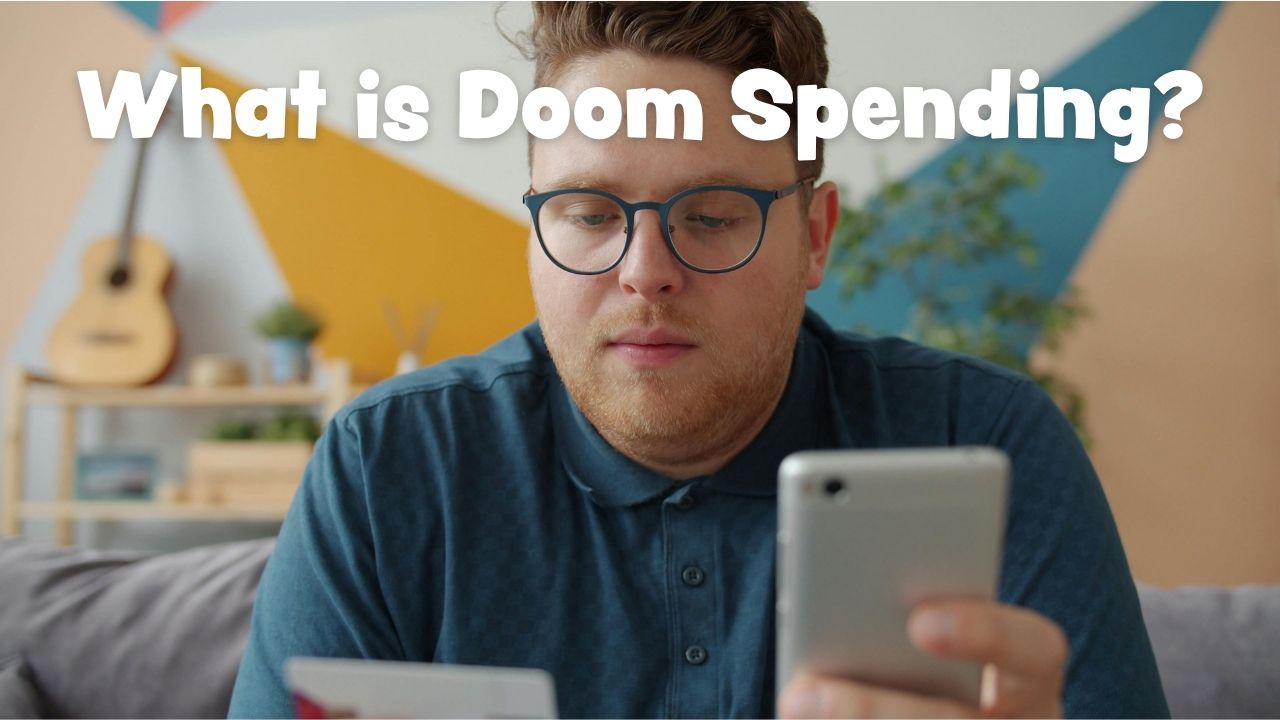
Have you ever had one of those days where everything feels... heavy?
You open social media and see headlines about inflation, rising grocery prices, layoffs, or another political debate. Then you see someone on vacation, someone buying a new vehicle, or an influencer showing off their latest Amazon haul.
Ten minutes later, you're online shopping.
Not because you needed anything.
Just because buying something felt good.
If that sounds familiar, you're not alone.
There's actually a name for it: doom spending.
What is doom spending?
Doom spending is when we make unnecessary purchases because we're feeling stressed, anxious, or uncertain about the future. Instead of buying something because we need it, we're buying it because we're looking for a little relief. Researchers describe it as emotionally driven spending that helps people cope with economic and social stress.
And honestly... it makes sense.
When life feels out of control, buying something gives us a quick sense of control.
The problem is, that feeling doesn't last.
Why is this becoming so common?
We're living in a world where we're constantly connected.
Every day we're exposed to:
- Rising prices
- Economic uncertainty
- Social media comparisons
- Endless advertising designed to get us to click "Buy Now"
It's the perfect storm.
One survey found that 69% of Americans say their emotions have influenced their spending habits, and more than one-third said they do it every week.
At the same time, financial stress continues to rise. A recent financial capability study found that 63% of people report feeling stressed about money, while 26% say they're spending more than they earn.
Those numbers don't prove doom spending causes financial stress, but they do show that emotional spending is happening against a backdrop of growing financial pressure.
The dopamine trap
Here's what happens.
You have a stressful day.
You buy something.
Your brain gets a quick hit of dopamine.
For a little while, you feel better.
Then the package arrives.
A few days later, the excitement fades...
But the credit card bill sticks around.
Psychologists say doom spending creates temporary emotional relief but often leaves people feeling more anxious afterward because the underlying problem never went away.
So how do you stop?
The goal isn't to never treat yourself.
The goal is to become aware of why you're spending.
The next time you're ready to buy something, pause and ask yourself:
- Do I actually need this?
- Am I trying to solve a problem or soothe a feeling?
- Would I still want this tomorrow?
- Is there another way I could take care of myself today?
Sometimes the answer will still be, "Yes, I'm buying it."
That's okay.
The difference is you're making a conscious decision instead of an emotional reaction.
One challenge for this week
Before you click "Buy Now," give yourself a 24-hour pause.
You might still decide to make the purchase tomorrow.
Or you might discover that what you really needed wasn't another package at your door...
It was a break, a walk, a conversation with a friend, or simply stepping away from the endless scroll.
Your budget will thank you, and so will your future self.
Feeling like your money disappears faster than you can earn it?
Wish you had more financial breathing room?
Stop wishing — start saving with small changes that make a big difference.
This guide will help you uncover hidden money leaks and redirect your cash toward what matters most.
✅ Spot sneaky money drains hiding in plain sight
✅ Shift spending habits without complicated budgets
✅ Free up cash to hit your financial goals faster
✅ Gain control and reduce money stress with simple steps

Responses